Mount Etna 2002 Eruption: What You See Today
Historical context and practical route reading in the 2002 eruption area.
Table of Contents
2002 eruption overview
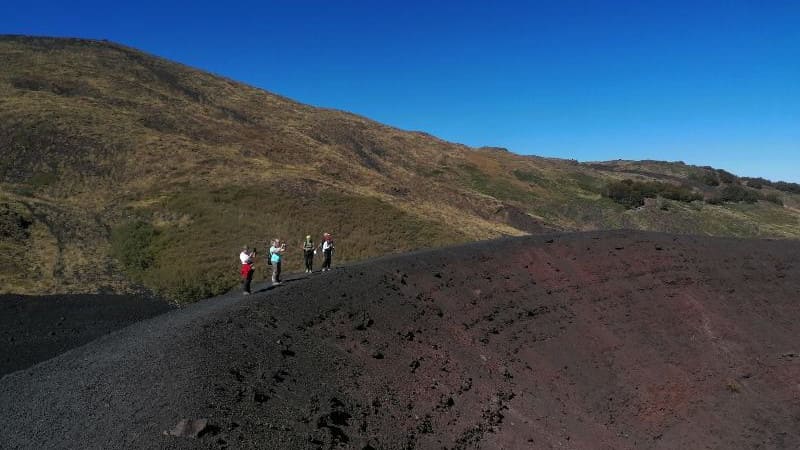
The 2002 flank eruption reshaped large sectors of Mount Etna, especially on the north side. Today, many trekking routes cross these volcanic formations, making the area one of the best open-air references for understanding recent Etna activity.
Reading the terrain today
Hikers can identify lava textures, crater rims, fracture lines, and vegetation recovery zones. These details explain how quickly volcanic landscapes change and why route conditions differ from season to season.
Safety and guided access
Even in non-summit areas, weather and volcanic constraints can affect feasibility. Guided routes remain the safest way to interpret terrain and adapt timing when local conditions change.
Key landforms to identify
In the 2002 sector, hikers can distinguish cone alignment, fracture orientation, and lava-surface textures that indicate cooling dynamics. Scoria-rich slopes, sharper crater rims, and blocky lava fields often coexist in short distances, making this area ideal for practical volcanology interpretation during guided walks.
Vegetation recovery is another field indicator. Pioneer species and patchy recolonization zones help estimate disturbance age and microclimate exposure. Reading these details improves route awareness and explains why some tracks remain unstable longer than others.
Route management and safety margins
Even in non-summit itineraries, wind, visibility, and local restrictions can alter usable sections on the same day. Guides adjust pacing, stop points, and return timing to keep the experience safe and informative. For visitors, the best approach is flexible expectations: conditions shape the exact line of travel, while core educational value remains high across the whole 2002 landscape.
Final planning notes
Before departure, verify local updates, weather exposure, and route suitability for your group. A guided approach remains the most reliable way to combine safety, learning value, and realistic timing on Mount Etna.
Before You Go: Quick Planning Checklist
- Check updated weather and volcanic activity conditions for your travel dates.
- Confirm meeting point, start time, and transfer duration.
- Book your tour with flexible options when possible.
- Read local safety guidance before excursions.